On Sunday evening, July 26, 2015, Rod Peters and I drove to Ishpeming, MI to visit Clint Jones and his new Mineral Range Railroad. We had 'worked' the North Shore Scenic Railroad Two Harbors train that day so we got a late start to Yooper Country. As we drove through Ashland, we stopped to see the old Soo Line depot. It was built in about 1900 and suffered a devastating fire in 2001. It is being privately restored.


On display here is Soo Line steam engine #950.


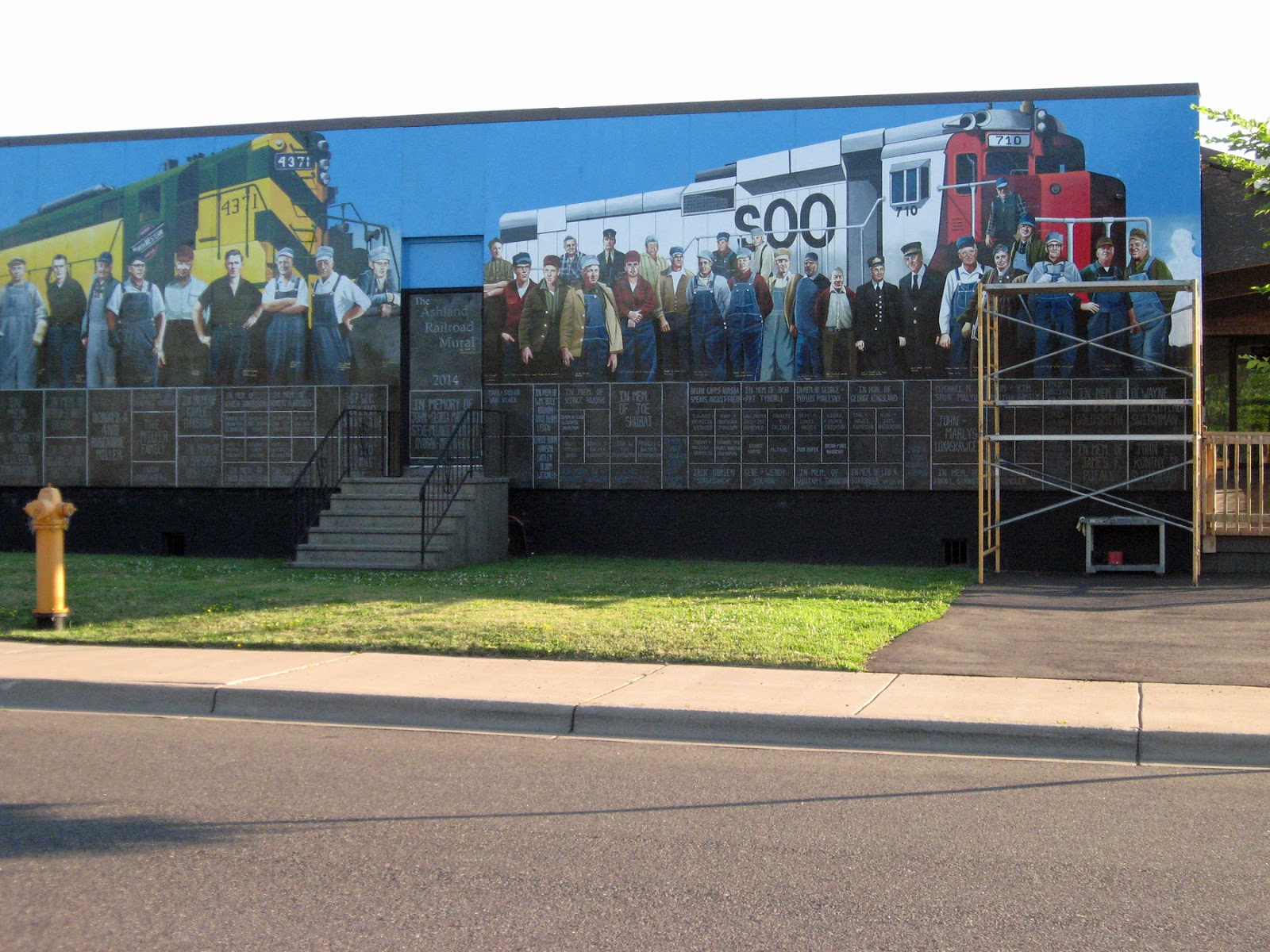
On one of the buildings there is a beautiful railroad mural representing both the Soo Line Railroad and the Chicago & North Western Railroad which served the city. All men pictured on the mural were actual railroaders and their name is listed beside them.

The new Mineral Range Railroad built new track from Humbolt Junction into the Humbolt mine. Track here had previously been removed and the right-of-way used for a trail. Now, previous unusable tailings are being transported 65 miles by truck to this site where a new concentrating process reduces the tailings to 25-33% of their original volume and is now rich in nickel and copper.


We (civilians) are not permitted inside the facility so we will catch our train after it passes through the gate. Our lead engine will be a GP10, an ex-Great Northern engine.

And our trailing unit will be a GP9.

The concentrate we are hauling is very heavy and trains are 20 loaded cars long. The facility has about 240 cars, most of them brand new and they have steel covers.

Come along for a ride as we travel to Ishpeming where these cars will be left for the CN to pick up.


Above is Humboldt Junction. The track straight ahead and the right-of-way we are on were LS&I (Lake Superior & Ishpeming) trackage. The track to the left is CN track and goes to L'Anse and Baraga. Mineral Range now owns the former LS&I trackage and CN has trackage rights over it to Humboldt Junction.

This is the CN track to the left to L'Anse and Baraga.

Continuing on our way,

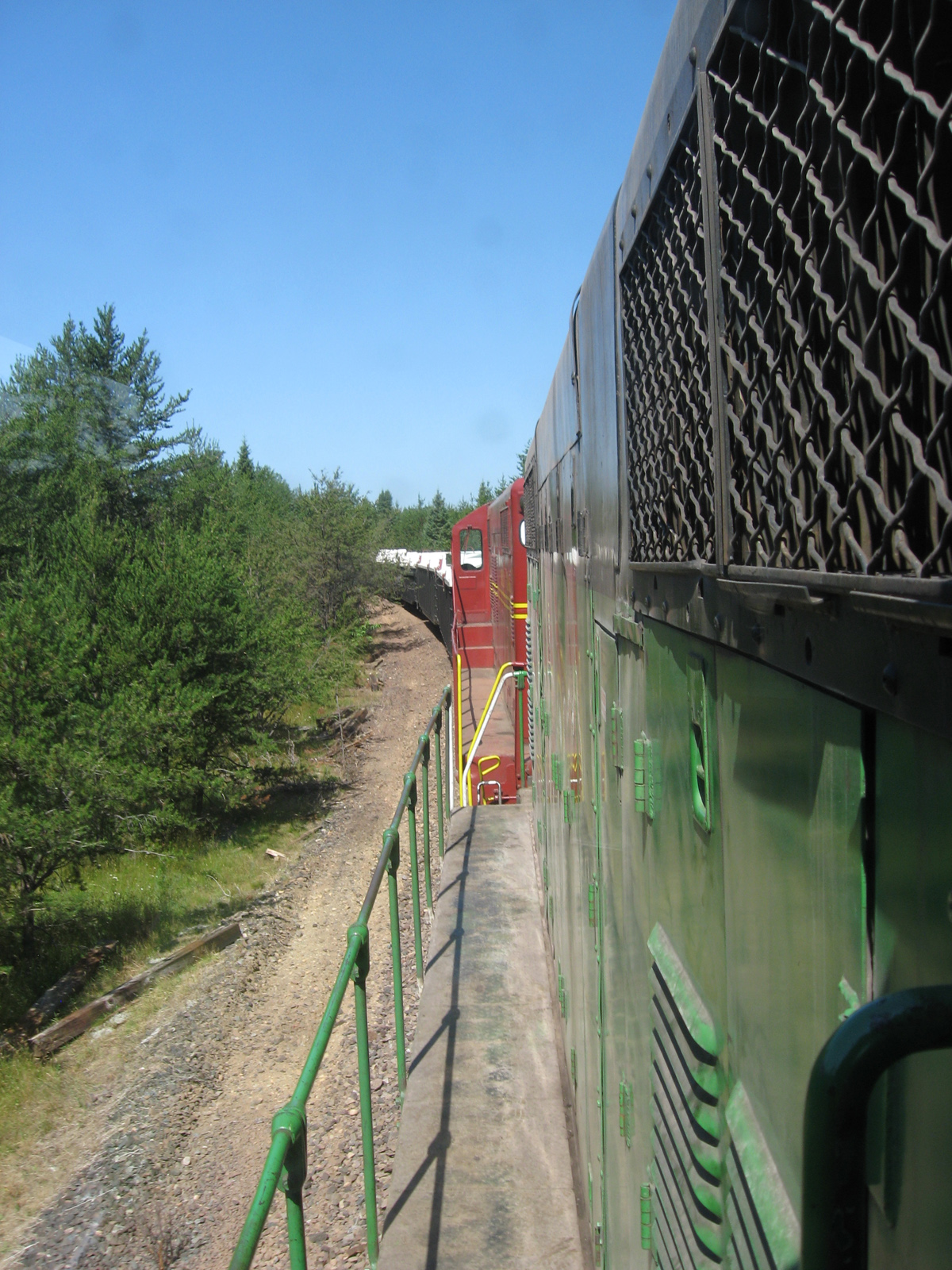
Lots of new ties are being inserted to bring up the track speed.

At this crossing, there WAS a school to the left. So crossing lights had to be installed. There is no school now and the lights are turned off but the train still has to stop and the conductor has to get down on the ground to "protect the crossing."


A siding holds the track repair equipment.

The Mineral Range has purchased a former Erie Mining Company ALCO C420 and will have it restored to operating condition for working on the line.


Entering Ishpeming. We are on the main track, the next 2 tracks belong to the Mineral Range and the next 2 tracks are leased from the CN.

The Mineral Range started hauling concentrate in November, 2014. Before the new gons with steel covers were built, the railroad used older gons and covered the concentrate with tarps.


The CN engine house is on the right.

And the depot serves as headquarters for the CN crews.

We head 'uphill' and then back our train into the yard.

Rod enjoys his view from the captain's chair (the conductor's chair).

We then do a reverse move down the main line and use the old SOO runaround track to access the Mineral Range engine house.

Ties on the siding into the engine house will be replaced shortly.

The Mineral Range converted two hopper cars into ballast cars that can dump ballast on the outside of the rails or between the rails.

And this is the recently constructed Mineral Range engine house!

Two other crew members worked the Pluto sub and were just finishing their work so we didn't have the opportunity to ride that train. Here they head back to wrap up their switching.

Since the MR moves hazaardous materials, they are required to have a buffer car. They are using a former Soo Line steel caboose, repainted ORANGE!!!

We had several hours remaining in the day so we headed to Marquette, MI. On the way we visited the Michigan Mining Museum (no pix) which was very interesting. Then down the hill to see the old abandoned DSS&A/Soo Line iron ore dock.

This dock was constructed in 1931 and was taken out-of-service in 1971.

We journeyed up the shoreline to the Presque Isle, the location of the LS&I taconite dock. This dock is in active service today.


In the park are preserved LS&I equipment: an engine, ore car, and caboose.

We stopped by Eagle Mills, the location of the LS&I yard, but it is fenced off these days and inaccessible to us.


The following day we headed back home. Just north of Channing, MI, we found a simple hopper unloading facility. The material unloaded here looked like cement.


In Channing, MI we found the E&LS (Escanaba & Lake Superior) yards but no action!


The Channing depot, former Milwaukee Road, is rapidly deteriorating.


We had my scanner on and heard a train was arriving from the north! They were bringing stored cars back south. They cut off at the north switch and then put the engine in the engine house.


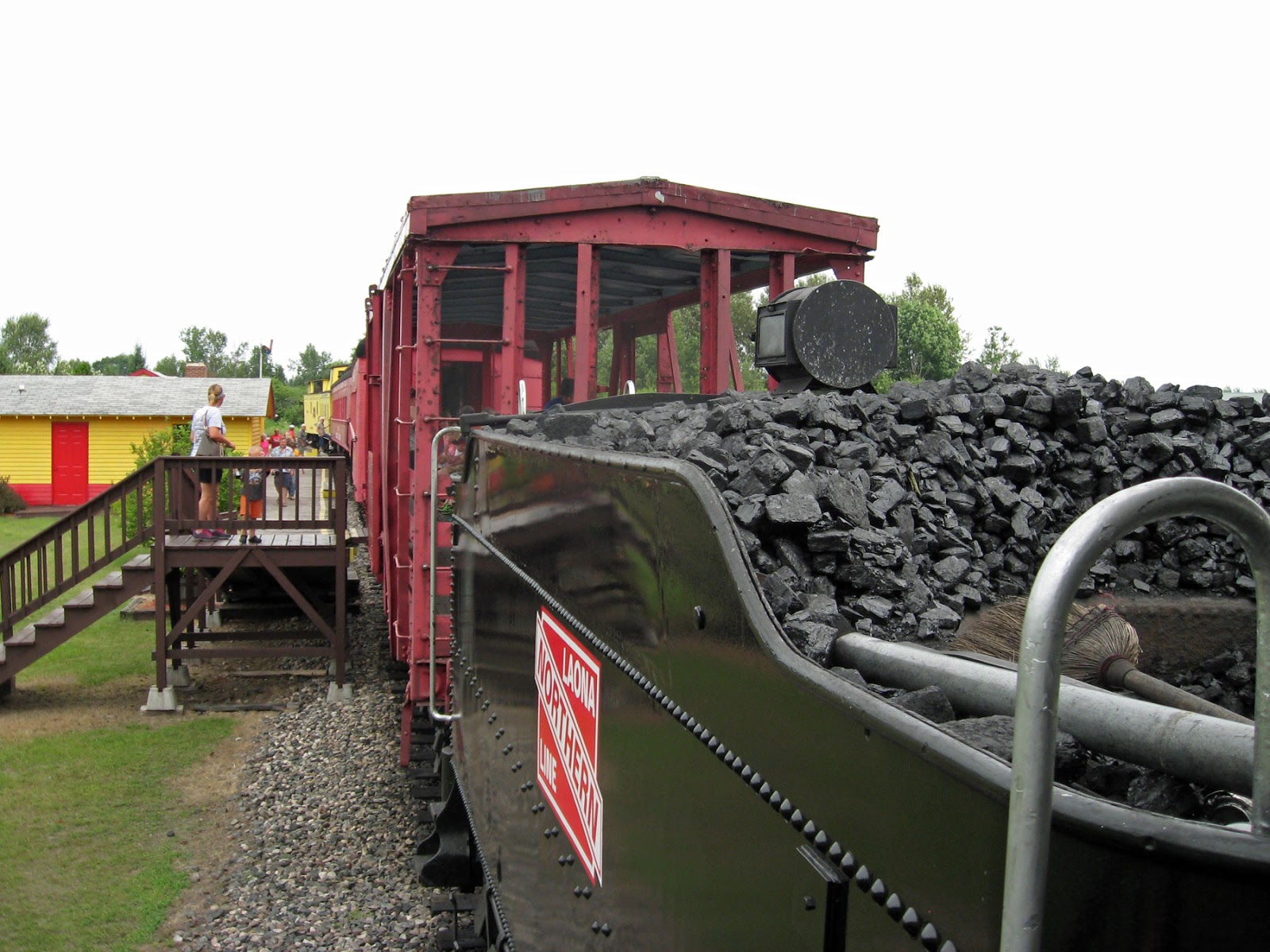
The conductor told us a train would be arriving from the south later in the afternoon but we couldn't wait so we headed for Wisconsin! At the state line Wisconsin Visitor Center, we found a great display of local history and wildlife. Don't miss it if you are in that neighborhood. Next I stopped at the Lumberjack Steam Train at Laona which operates their famous 4-spot steam engine.


They have no back-up engine and the engineer told me they have never missed an operating day! Also, he is a paid worker and works EVERY day all summer! (He must love steam!!!)



Next stop Rhinelander and the Logging Museum. It's a great museum and free (contributions encouraged). One of the great features is this Phoenix steam log engine used for hauling logs out of the woods. It replaced the horses or oxen and could pull much more.

There's an operating Phoenix steam engine in Wabeno, WI that I would love to see run! These machines were built in Eau Claire, WI!!!

Also displayed is a narrow gauge steam engine.

All museums need volunteers and this man was restoring a narrow gauge log car. He's a retired physics teacher and he and others did much work on the narrow gauge coach in the background.


There's much more than the train stuff at this museum as it is a logging museum. They also have things like an outboard motor collection and a collection of CCC memorabilia. Here is their train depot which had lots of train stuff inside.

Including a large model railroad in the basement.


The Rhinelander scale house (used for weighing railroad cars) was saved. (The picture wouldn't upload but here is the inside of the scale house.

And they are fortunate to have a Soo Line wood caboose, which has been fully restored.

To me, one of the neatest exhibits was an actual turntable, used for turning narrow gauge equipment.

So if you are in the Rhinelander area, make sure to visit the logging museum. Continuing on our way, we stopped at the former Soo Line roundhouse in Rhinelander. This was much bigger originally but at least 5 stalls have been saved.


The CN is storing hopper cars, and a few coil cars, in the yard.

There are very few industries in Rhinelander still served by rail but we found this plastics operation on the west side of the city. There probably are a few more industries but we didn't search for any.

Continuing west, I wanted to stop in at the Tomahawk Railway, now owned by the Genesee & Wyoming. Unfortunately, we found nothing happening, not even a visible engine (probably in the engine house).

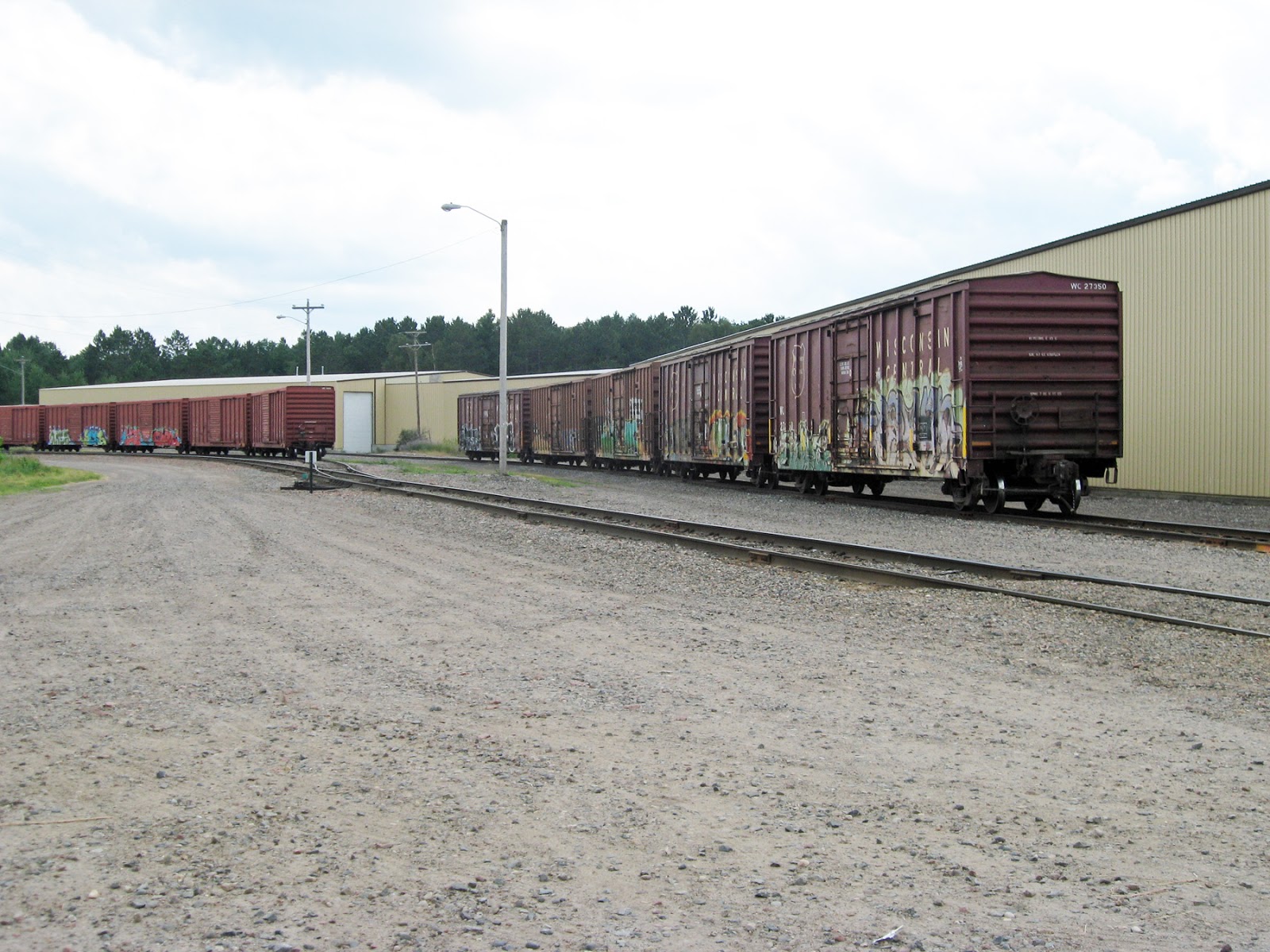
But the former Milwaukee Road depot in Tomahawk still exists.

In the city park we found a Marinette, Tomahawk & Western steam engine. It appears to be in good shape, at least it has a nice coat of paint on it.


At Prentice, the depot appears to be in fine shape.


And we stopped in Hawkins for a shot of the Soo Line depot, now a museum.

We crammed a lot of train action and a lot of MILES into two days but it was well worth it. Another fun vacation!!!!


